Fly fishing has its own unique vocabulary, and understanding the terminology is key to improving your skills. Here’s a comprehensive guide to get you started:
Fly Fishing Tackle Terms
- Rod Weight: A numbered system (0-12) that categorizes fly rods based on the size of the line they can cast.
- Fly Line: A weighted line that carries light flies to your target. Match the line weight to your rod weight.
- Action: A rod’s flexibility, categorized as fast, medium, or slow, affecting its casting performance.
- Drag: A system that slows the rotation of the spool, helping to bring in fish smoothly.
Line and Leader Terms
- Backing: Additional line attached to the fly reel, designed to keep a fish on if it exhausts the fly line.
- Leader: A tapered monofilament line that connects the fly line to the fly.
- Tippet: The thin portion of the leader that attaches to the fly, changeable based on circumstances.
Fly Types and Techniques
- Dry Fly: An artificial fly that floats on the surface, imitating insects.
- Wet Fly: A submerged fly, including nymphs and streamers, imitating aquatic insects or baitfish.
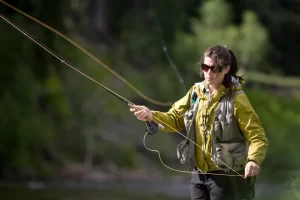
- Fly Casting: The act of throwing the line and lure over the water.
- False Cast: Casting the line in the air to generate momentum or dry off a soaked fly.
Casting Techniques
- Backcast: Carrying the line behind the angler to create momentum for the forward cast.
- Forward Cast: Shooting the line in front of the angler after a backcast.
- Mending: Lifting the casted line off the water to eliminate drag and create a natural presentation.
- Roll Cast: A short cast used when a backcast is limited by obstructions.
On-the-Water Terms
- Presentation: The way a fly is presented to fish in the water.
- Dead Drift: Allowing the fly to drift naturally with the current.
Take Your Fly Fishing to the Next Level
Now that you’ve learned the basics, it’s time to put your knowledge into practice. Book a guided trip, visit your local fly shop, or join an online community to learn more. Practice your casting techniques and experiment with different flies and presentations. With time and patience, you’ll become a proficient fly angler, and the language of fly fishing will become second nature.
Image/Source: WOS