Winter arrived early in eastern Idaho and across Yellowstone Country, with temperatures plunging well below zero and reminding anglers just how serious cold weather can be. Conditions like these aren’t unusual in the northern Rockies, and anyone planning to fish late fall or winter waters needs to be ready for them.
Despite the cold, this season can offer some of the year’s best trout fishing. Browns are deep into their fall run, and on rivers like the Madison, rainbows push up from Hebgen Lake to gorge on eggs. Many of those fish will spend the entire winter in the river inside Yellowstone National Park, overwintering much like steelhead before spawning in early spring and returning to the lake once conditions improve.
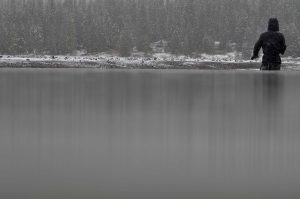
Elsewhere, rivers such as the Henry’s Fork and the South Fork continue to produce. Blue-winged Olives and midges keep trout looking up, and while anglers should always avoid disturbing spawning fish, aggressive browns away from redds can be targeted effectively with large streamers.
All of this opportunity comes with a warning: cold fingers and iced-up guides are manageable; hypothermia is not. Staying warm isn’t just about comfort—it’s about safety.
Why Staying Warm Matters
Anyone who has fished through single-digit temperatures knows that preparation makes all the difference. For anglers new to winter fly fishing, staying warm should be the top priority. The following tips focus on minimizing risk while maximizing time on the water.
Practical Tips for Winter Warmth and Safety
Stay dry at all costs
Even a tiny leak in waders can turn a winter outing short and dangerous. Near-freezing water quickly soaks socks and drains body heat. Always check waders before heading out. Dry hands are just as important—handling fish makes that difficult, so carrying a small towel in a jacket pocket helps keep fingers functional.
Protect extremities
Hands, feet, ears, and noses take the worst beating in cold weather. Wool socks under waders are essential, and gloves or mittens often become non-negotiable. Remember the ABC rule: Anything But Cotton. Cotton absorbs moisture, dries slowly, and accelerates heat loss.
Cover the head and face
A significant amount of body heat escapes through the head. Wool caps, knit hats, and neck gaiters or face coverings help trap warmth and block wind.
Use hand warmers wisely
Disposable hand warmers are effective, but they work best in jacket pockets rather than inside gloves. That way, fingers can warm up even if gloves get wet. Slipping warmers near feet—outside socks but inside boots—can also help on bitter days.
Layer intelligently
Fleece and microfleece layers provide warmth without bulk. Different thicknesses allow adjustments based on conditions. The goal is insulation without overheating.
Stay hydrated, skip the alcohol
Cold weather reduces thirst, but dehydration still happens. Water is essential. Hot drinks like tea or coffee can help, but alcohol should wait until the day is over—it lowers core body temperature despite the initial warming sensation.
Step out of the water regularly
Standing in icy water steadily drains heat, even with good gear. Taking breaks on dry ground helps maintain body temperature.
Use layers to regulate heat
Layers aren’t just for warmth—they help prevent sweating. Sweat in cold weather leads to faster heat loss. Adjust clothing throughout the day to stay dry and comfortable.
Take advantage of sunlight
When the sun appears, soak it in. Dark-colored outer layers absorb solar heat more efficiently.
Cover exposed skin
Cold air quickly numbs exposed areas, increasing the risk of frostbite and hypothermia. Full coverage matters on the coldest days.
Fish with a partner
Winter fishing is safer and more enjoyable with a buddy. A slip into icy water can be life-threatening without immediate help.
Carry fire-starting supplies
A lighter and basic fire-starting materials weigh almost nothing and can be lifesaving. If someone takes a spill far from the vehicle, a small streamside fire may be the fastest way to restore warmth.
Winter Fishing Is About More Than Fish
None of these tips are complicated, but they are critical. Winter fly fishing rewards preparation and respect for the conditions. Staying warm keeps anglers safe, alert, and able to enjoy the experience rather than endure it.
Cold-weather trout fishing can be incredibly rewarding when done right. With the proper mindset and preparation, winter doesn’t have to be something to survive—it can become one of the most memorable times of the year to be on the water.
Image/Source: Hatch