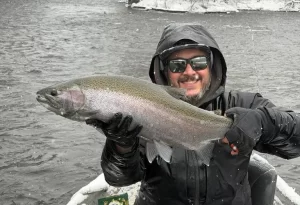
Hooking into a powerful Great Lakes steelhead during the dead of winter delivers an adrenaline rush few anglers forget. The challenge is real. Freezing temperatures test both gear and endurance, and long days on icy tributaries demand preparation and persistence. From New York to Michigan, dedicated winter steelhead anglers embrace harsh conditions in pursuit of chrome-bright fish.
Among respected names in the Great Lakes steelhead scene, Danny Colville stands out. Known for building high-quality custom center pin reels and for extensive steelhead experience across North America, Colville has applied lessons learned in Alaska and the Pacific Northwest to rivers across Ohio, Pennsylvania, Canada, and beyond. Years of observation have given Colville a deep understanding of how steelhead behave in extreme cold, and success often comes down to reading conditions and adjusting tactics.
Winter Conditions Control Everything
Across the Great Lakes region, weather and river type dictate winter fishing opportunities. Tailwaters such as New York’s Salmon River often remain open thanks to consistent water flow. Larger Michigan rivers also resist freezing because of high water volume. Smaller rivers in Ohio and Pennsylvania tend to freeze quickly, limiting fishing windows to warm spells or thaw events that increase water flow.
Extreme cold creates major gear challenges. Frozen rod guides can shorten fishing time and damage equipment. Colville recommends preventative measures such as applying ice-resistant paste to rod guides. This slows ice buildup and allows more productive drifts before cleaning becomes necessary. For winter-specific rods, oversized guides can also help delay freezing, allowing anglers to stay focused on fishing instead of constant maintenance.
Where Steelhead Hold in Winter
When water temperatures drop into the mid to low 30s, steelhead spawning activity stops. Fish hold in tributaries until spring migration begins. During this period, steelhead typically seek slow water that requires minimal energy to maintain position. Undercut banks become prime winter holding areas, offering protection from current, floating ice, and debris.
The challenge is that slower water often freezes first, especially during low water conditions. Higher winter water levels often improve fishing opportunities, but extreme high water events can be dangerous. Large surges can push ice and debris downstream, sometimes resulting in fish mortality along riverbanks after severe events.
Bigger Presentations Can Trigger Bites
Steelhead packed into winter holding water can be difficult to fool, especially in areas with heavy fishing pressure. In crowded winter runs, starting with larger bait presentations can help target aggressive fish first. Large egg sacs or oversized beads often draw reaction strikes from dominant fish in a holding group.
If larger offerings fail, gradually downsizing presentations can help match more cautious fish. However, constantly working the same run all day often reduces productivity. Moving between runs and restarting with larger presentations can improve chances of finding actively feeding fish.
Smart Movement Beats Stubborn Fishing
Winter steelhead fishing rewards anglers who stay mobile and adapt to changing river conditions. Covering water, monitoring flows, and adjusting bait size based on fish response all play major roles in success. Combining preparation, observation, and flexibility often separates productive days from frozen fingers and empty nets.
For anglers willing to brave the cold, winter steelhead fishing offers some of the most rewarding freshwater action available across the Great Lakes region.
Image/Source: OL