Surf fishing can feel overwhelming at first. Standing on the shoreline with crashing waves and endless water in front of you makes the ocean seem far more complex than a pond or river. One of the most common questions new surf anglers face is where to start. The good news is that surf fishing is far more approachable than it appears, and a few core principles apply no matter where the coast lies.
While target species change by region, the fundamentals of surf fishing remain largely the same. Reading the beach, understanding tides, and choosing versatile gear will put anglers in position to succeed almost anywhere. Mastering these basics builds confidence and lays the groundwork for exploring more specialized techniques later on.
Understanding Tides Is Essential
The ocean is always moving, even when it appears calm. Tides create constant water flow, either pulling water away from the beach or pushing it back in. This movement directly influences when fish feed. Showing up at random times often leads to slow action, while fishing during the right tide window can completely change the experience.
Most surf species feed during specific periods, usually as the tide approaches its highest point and again as it falls halfway back toward low tide. Arriving two to three hours before high tide and staying several hours afterward often overlaps with these feeding windows. Tide charts are easy to find online, and using the nearest inlet as a reference point provides reliable timing.
Learning How to Read the Beach
Even at the right tide, success depends on where casts are placed. Fish rarely spread evenly across the surf zone. Instead, they use underwater features such as troughs, holes, and subtle changes in depth as travel routes and ambush points.
Waves reveal these features. A wave that breaks far offshore and rolls all the way in usually indicates shallow, uniform bottom. When a wave breaks and then suddenly flattens out, it often signals deeper water beneath the surface. Casting into these irregular areas greatly improves the odds of finding fish.
Choosing Reliable Surf Gear
Surf fishing gear must handle both the fish and the environment. A versatile setup consists of a 10-foot spinning rod paired with a 6500 to 7500 size reel spooled with 30-pound braided line. This combination can handle a wide range of species while still delivering long casts with heavy sinkers or lures.
Surf fishing demands power more than finesse. Smaller species may not fight hard, but reaching feeding zones often requires casting several ounces of weight far beyond the breaking waves. A longer rod provides the leverage needed to do that consistently.
Essential Surf Accessories
A few accessories make surf fishing easier and protect valuable gear. A sand spike is critical for keeping reels out of the sand while bait soaks or rigs are adjusted. Plug bags allow anglers using lures to stay mobile and cover more shoreline without hauling bulky tackle boxes. For bait anglers, collapsible surf carts simplify transporting coolers, rigs, and tools across soft sand.
Common Surf Fishing Rigs
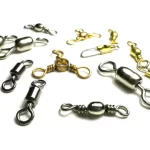
Most surf bait rigs follow similar designs and can be adjusted for different species by changing hook and leader sizes. The standard bait rig uses a three-way swivel to reduce line twist and keep weight and bait separate. High-low rigs suspend two baits at different depths, increasing coverage of the water column. Fish finder rigs allow fish to move with the bait before feeling resistance, making them especially effective with larger cut baits.
Sinkers and Supporting Components
Pyramid sinkers are the most common choice in the surf because they dig into the bottom and resist rolling in waves. Bank sinkers allow more movement and work well for species that roam the surf line. Floats added near the hook lift bait off the bottom and increase visibility, helping fish locate offerings more easily.
Productive Lures for the Surf
A small group of lures consistently produces along the coast. Metal lures excel at long-distance casting and imitate fleeing baitfish. Bucktail jigs work in a wide range of conditions and can be fished at different depths. Paddle-tail swimbaits offer a steady, natural presentation, while diving plugs shine during low-light conditions when larger predators move closer to shore.
Surf fishing rewards patience, observation, and preparation. Understanding tides, reading the water, and relying on proven gear removes much of the mystery from fishing the beach. Progress comes quickly once these fundamentals click. Each trip adds knowledge, and even slow days provide valuable lessons. With time and practice, the surf transforms from an intimidating expanse into a familiar and productive place to fish.
Image/Source: OL