
Kayak angler Damian Thao landed what could have been one of the largest largemouth bass ever recorded in California, but a little-known regulation may prevent the catch from being officially recognized. The fish, weighing 18.75 pounds on a certified scale, easily qualifies for lake-record status—yet a technical violation involving the transport of a live fish could nullify the achievement.
Thao shared the full story in a Facebook post, choosing transparency about both the impressive catch and the mistake that followed. The fish marked a personal milestone, as it was his first bass exceeding 12 pounds and a clear entry into the “teener” category prized by serious bass anglers.
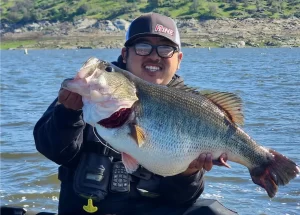
According to Thao, the catch happened early in the day while fishing from a kayak at an undisclosed California lake. Using a large swimbait—a 10-inch Megabass MagDraft in Albino Pearl—he hooked the fish within his first hour on the water. The fight was brief, lasting around 30 seconds, and initially, he believed he had landed a solid double-digit bass. That perception quickly changed once he lifted it aboard.
An initial weight estimate hovered around 17 pounds. After paddling to shore, Thao re-weighed the fish on a handheld scale, recording 17.46 pounds—already enough to raise suspicions of a potential lake record. Acting quickly, he and a friend attempted to contact officials from the California Department of Fish and Wildlife and a nearby U.S. Army Corps of Engineers ranger station to arrange for a certified weigh-in. However, being a holiday weekend, they were unable to reach anyone.
Faced with limited options, Thao made the decision to transport the fish alive in his friend’s livewell to a certified scale. There, the bass officially weighed 18.75 pounds. After documenting the weight, the anglers returned to the lake and released the fish back into the water.
It wasn’t until the following day that Thao realized the potential issue. After recounting the process to a friend, he learned that California regulations prohibit the transport of live fish away from the waterbody where they were caught. The law is intended to prevent the spread of invasive species and protect aquatic ecosystems, but it creates a difficult situation for anglers attempting to certify record catches without harming the fish.
Although similar restrictions exist in other states, they are often more narrowly focused on invasive species or transferring fish between separate waterways. In California, however, the rule is more broadly applied, effectively requiring anglers to kill a fish if they intend to transport it for an official weigh-in. This runs counter to the catch-and-release ethic embraced by many modern anglers.
Thao acknowledged the mistake in his post, emphasizing that he was not trying to justify his actions but rather to share the experience as a learning opportunity. Despite the potential disqualification, many in the fishing community have praised his honesty and conservation-minded approach. For them, the fish still represents a remarkable achievement, regardless of official recognition.
The situation highlights a growing conflict between conservation practices and regulatory frameworks. As catch-and-release fishing continues to gain popularity, more anglers may find themselves navigating similar challenges when pursuing record fish.
Whether or not the bass is ever officially recognized, Thao’s catch stands as a memorable moment—and a reminder that even record-breaking fish can come with unexpected complications.
Image/Source: OL