When most anglers pack it in after fall, a small but consistent opportunity remains along the coast. Even after the main migration wraps up, a handful of striped bass stay behind. These “holdover” fish can provide steady action deep into winter for anglers willing to adjust their approach.
In places like New Jersey and along the broader Atlantic Coast, the traditional fall run used to fade around late November. Today, many anglers are finding bass well into December and even the New Year. Changing ocean temperatures and shifting bait patterns are likely contributing to this extended window.
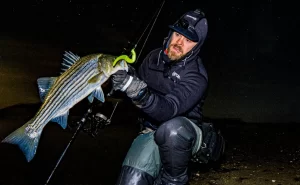
While winter fishing often means smaller fish, the action can still be fast and rewarding with the right strategy.
Expect Smaller Fish but More Action
Late-season surf fishing often transitions from larger migratory bass to smaller fish. This happens for two main reasons. Larger stripers tend to migrate first, leaving behind smaller ones. In addition, many of the fish that remain through winter are resident bass that spend much of their time in bays and inlets before moving into the surf to feed.
Although trophy fish are less common, the upside is numbers. Catch rates can be surprisingly high on the right day.
Lighten Up Your Tackle
Winter stripers respond well to downsized gear. Instead of heavy surf setups used during peak season, a lighter outfit improves both presentation and enjoyment.
An 8-foot medium-action rod paired with 15- to 20-pound braided line is a solid choice. This setup allows for better casting of smaller lures and makes fighting smaller bass more exciting.
Long casts are not always necessary. In colder months, fish frequently feed close to shore, sometimes within 50 feet or less. A balanced setup ensures both short and long casts can be made effectively.
Match the Winter Forage
By late season, most large baitfish have moved on. Species like mullet and bunker are often gone, leaving smaller forage behind. One of the most important winter food sources is sand eels.
These slender baitfish often linger into early winter and are easy to imitate. A simple diamond jig in the 2- to 3-ounce range is one of the most effective lures available.
Retrieve the jig steadily, keeping it near the bottom with occasional contact. Adding a teaser rig about a foot above the jig, such as a small fly, can double the chances of a strike. This classic setup allows anglers to present multiple baitfish profiles at once and often outperforms a single lure.
Pay Attention to Water Temperature
Water temperature plays a critical role in winter fishing success. Even when air temperatures drop, ocean water can remain relatively warm due to currents and wind.
Striped bass feed most actively when water temperatures are between 50 and 65 degrees. Larger fish prefer the higher end of that range, while smaller bass can remain active in colder water.
Fishing can still be productive in temperatures down to around 45 degrees. Below that, activity slows significantly unless warmer water is present due to currents or discharge.
Checking local surf temperature reports can help determine whether conditions are worth fishing.
Adjust Expectations and Stay Flexible
Winter surf fishing is about adapting to changing conditions. Fish behavior, location, and feeding patterns all shift as temperatures drop. Success often comes from staying mobile, adjusting lure size, and targeting areas where bait is present.
Patience and persistence are key. Even on cold days, a productive bite can develop quickly when conditions align.
Do not put the surf gear away just because winter has arrived. Bundle up, downsize tackle, and focus on water temperature and bait. With the right adjustments, winter striped bass fishing can deliver steady action and a fresh challenge when most anglers have already called it a season.
Image/Source: F&S