Crappies are known for being cooperative, but even these popular panfish can turn finicky under certain conditions. Subtle changes in presentation, timing, and technique often make the difference between a slow outing and a pile of slabs on the ice. These five practical adjustments can help increase success when targeting crappies through the ice.
Crappies are found throughout the Ice Belt and are prized for both their accessibility and excellent table fare. While catching them is generally straightforward, dialing in the right approach can significantly boost catch rates.
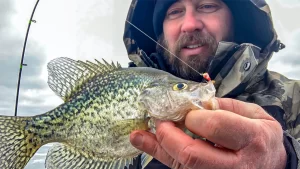
1. Ease Up on the Hookset
Crappies are often called “papermouths” because their mouths are extremely thin and tear easily. An aggressive hookset, common when targeting other species, frequently results in missed fish.
A better approach is to keep lifting the jig when a bite is detected and simply raise the rod while beginning to reel. This steady pressure allows the hook to set without ripping free. Pairing this technique with a rod that has a soft, flexible backbone and a sensitive tip helps absorb shock and improves landing percentages.
2. Keep the Jig Moving Upward
Crappies are natural predators, feeding on everything from plankton to minnows. One effective strategy is to keep the jig moving and gradually raise it above the fish.
Since crappies tend to feed upward, a lure that appears to be escaping often triggers a chase response. By slowly lifting the bait, fish are encouraged to follow, and once a crappie commits to moving up, a strike usually follows.
3. Trigger Strikes with Aggression
When a school of crappies refuses to bite, especially during midday or under cold, high-pressure conditions, a more aggressive approach can turn the tide.
Instead of downsizing, consider upsizing the presentation. Swap small jigs for spoons tipped with minnow heads or use a lipless crankbait. Aggressive jigging above the school can create enough commotion to attract attention. Larger, more dominant fish often break away from the group to investigate and strike.
4. Slow Down with Deadsticking
If aggressive tactics fail, a more subtle presentation can be effective. Deadsticking involves using a live minnow on a plain hook, lightly weighted with a split shot, and suspending it beneath a slip bobber.
This technique relies on patience rather than motion. A live minnow presented naturally can entice even the most reluctant crappies, making it a reliable option when fish refuse to chase artificial lures.
5. Focus on Low-Light Periods
Crappies are most active during low-light conditions. If daytime efforts produce limited results, the bite often improves dramatically at dusk or after dark.
Fish that ignored presentations during daylight hours frequently become aggressive once light levels drop. Evening and nighttime outings can provide some of the most productive crappie fishing of the season.
Image/Source: SI