Engine power is one of the most important decisions when setting up a boat. While more horsepower often sounds appealing, the right choice depends on safety limits, performance goals, and how the boat will be used. Selecting the proper engine size ensures better efficiency, longer engine life, and safer operation on the water.
Understanding Maximum Horsepower Limits
Every boat has a maximum allowable horsepower rating. This limit is not arbitrary. It is determined using standards outlined in the Code of Federal Regulations, specifically § 183.53, which provides a formula or testing method for calculating safe engine capacity.
For most boats, the rating is calculated by multiplying the boat’s length by its width at the transom. That number is then matched to a standardized horsepower table. Certain hull designs, such as flat-bottom boats, may receive slight adjustments.
Smaller boats, particularly those 13 feet or less, can be rated through performance testing instead of calculations. These vessels must demonstrate safe handling during controlled maneuvers and high-speed operation. Even with successful testing, these smaller boats cannot exceed 40 horsepower.
The maximum horsepower rating, along with passenger and weight limits, is listed on the capacity plate required by the United States Coast Guard. Staying within these limits is critical. Exceeding the rating can be unsafe, may violate local laws, and can void insurance coverage.
Determining the Right Horsepower
Once the maximum rating is known, the next step is finding the ideal horsepower for performance and efficiency. This depends on several factors, including boat size, weight, and hull design.
Heavier boats require more power to move efficiently, while lighter boats can perform well with less. Hull type also plays a major role.
Displacement hulls, found on boats like sailboats and Downeasters, move through the water rather than across the surface. These designs typically need less horsepower but have lower top speeds.
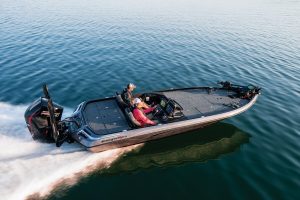
Planing hulls, common on fishing boats and recreational vessels, are designed to rise and glide on the water as speed increases. These boats require enough power to get on plane, which is essential for proper performance.
A common guideline for planing boats is to have roughly 25 to 40 pounds of total weight per horsepower. For example, a 2,300-pound boat might perform adequately with 60 to 90 horsepower. However, this range represents the minimum for acceptable performance, not optimal performance.
Avoiding Underpowering and Overpowering
Choosing too little horsepower can lead to poor performance and increased strain on the engine. An underpowered boat often struggles to get on plane, especially when carrying heavy loads. This can cause the engine to work harder than necessary, potentially shortening its lifespan.
On the other hand, exceeding the manufacturer’s maximum rating is dangerous and can result in loss of control at higher speeds. It may also lead to legal issues and insurance complications.
A practical approach is to select an engine that falls within 70 to 90 percent of the boat’s maximum horsepower rating. This range typically offers a strong balance of speed, fuel efficiency, and engine longevity.
Matching Horsepower to Usage
The right engine size also depends on how the boat will be used.
For anglers or recreational boaters who prioritize speed and quick acceleration, choosing horsepower near the upper end of the range provides better hole-shot performance and faster travel times.
For those who cruise at moderate speeds with lighter loads, mid-range horsepower is often sufficient. This option can reduce fuel consumption while still delivering reliable performance.
Heavy loads require additional power. Activities such as waterfowl hunting, where gear and equipment add significant weight, will benefit from higher horsepower to maintain efficiency.
Watersports like skiing, wakeboarding, or towing inflatables demand even more power. Strong acceleration and sustained speed are essential for these activities, making higher horsepower a better fit.
Having extra power in reserve can also be valuable for safety. Sudden weather changes may require faster travel, and additional horsepower can make a significant difference when conditions shift.
Balancing Performance and Budget
Higher horsepower engines typically come with a higher upfront cost and increased fuel consumption. However, they also offer improved acceleration, flexibility, and overall performance.
Speed preferences play a major role in this decision. Some boaters prioritize getting to their destination quickly, while others are comfortable cruising at a steady pace.
Modern boats have evolved significantly, with many capable of reaching impressive speeds when paired with high-output engines. However, maximum speed is not always necessary for enjoyable and safe operation.
Finding the Right Fit
The ideal horsepower is one that matches the boat’s design and intended use. It should allow the boat to perform efficiently without requiring constant full-throttle operation.
Underpowering can lead to frustration and added wear on the engine. Overpowering can create safety risks and legal concerns. Staying within recommended limits while choosing a motor suited to typical conditions ensures the best experience on the water.
Ultimately, the right choice balances performance, safety, and budget. With careful consideration, a properly powered boat delivers reliable performance, efficient operation, and confidence in a wide range of conditions.
Image/Source: Wired2Fish