Ice fishing offers incredible opportunities, especially early in the season, but it also demands respect. Like any outdoor pursuit, there is always some level of risk involved. With the right mindset, proper preparation, and reliable equipment, ice fishing can be enjoyed safely and confidently year after year.
Understanding ice conditions, recognizing danger zones, and carrying essential safety gear are the foundations of safe hardwater fishing. The following guidelines are designed to help anglers make informed decisions before ever stepping onto the ice.
Is Ice Fishing Safe?
Ice fishing can be safe when approached with caution and awareness. Problems typically arise when anglers rush early-season ice or assume conditions are consistent across an entire body of water. Ice thickness can vary dramatically due to water movement, snow cover, temperature swings, and underwater features.
By following proven safety practices and preparing for changing conditions, anglers greatly reduce unnecessary risk and improve confidence on the ice.
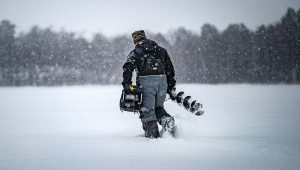
Ice Thickness Guidelines: What’s Considered Safe?
Ice thickness charts are commonly used as a reference point, but they should never be treated as a guarantee. Conditions vary not only from lake to lake, but from one section of water to another.
General guidelines:
-
4 inches – Safe for foot traffic
-
6–8 inches – Snowmobiles or ATVs
-
9–12 inches – UTVs or light vehicles
These measurements should be treated as estimates only. Clear ice near shore does not mean the same thickness exists farther out. Ice forms unevenly, and changes can happen within just a few feet. Continuous testing is essential.
Key Ice Fishing Safety Tips
-
Never attempt to access ice thinner than 4 inches.
-
New, clear ice is significantly stronger than cloudy or white ice.
-
Snow-covered ice forms more slowly and may hide weak spots.
-
Ice does not freeze uniformly—test thickness frequently while moving.
-
Avoid areas with current or flowing water, including narrows, inlets, and outlets.
-
Stay clear of slushy sections, which often indicate melting or weakened ice.
-
Watch for cracks, pressure ridges, and ice heaves.
-
Be cautious near culverts, springs, and warm-water discharges.
-
Pay close attention after snowfall, especially early in the season, as snow insulates ice and slows growth.
-
Fish with a partner whenever possible and inform someone of trip plans.
-
Shallow, wind-protected bays typically freeze first, but remain alert for underwater movement.
-
Use extra caution after warm spells, as conditions may change rapidly.
-
Dress in layers designed for cold, wet environments.
Essential Ice Fishing Safety Gear
Having the right tools on hand can make the difference between a close call and a serious emergency. These items are especially important during early ice conditions.
-
Spud bar or ice chisel – Used to test ice strength while walking. If ice breaks through with one strike, retreat immediately.
-
Ice picks – Worn around the neck and used for self-rescue if falling through the ice.
-
Measuring tool – A ruler or marked ice scoop helps verify thickness.
-
Floating ice suit or life jacket – Designed to provide buoyancy in freezing water.
-
Whistle – Useful for signaling for help.
-
Rope (50–100 feet) – Allows for rescue without approaching weak ice.
-
Cell phone – Kept in a waterproof case.
-
GPS fish finder – Offers valuable safety benefits beyond locating fish.
How a GPS Fish Finder Improves Ice Safety
Modern ice electronics can play an important role in safe navigation on frozen water.
Track Safe Routes
Turning on GPS tracking before stepping onto the ice allows safe entry routes to be retraced later. This is especially useful after dark, during snowstorms, or when wind erases visible footprints.
Mark Dangerous Areas
GPS waypoints can be used to mark weak ice, slush fields, pressure cracks, current zones, or other hazards. These markers remain visible even when snow covers warning signs.
Identify Safer Ice Development
Mapping tools help identify shallow flats, bays, and wind-protected areas that typically develop stronger ice earlier in the season. Deeper water and open basins often freeze later and should be approached cautiously.
A Smarter Way to Approach Ice Fishing
Ice fishing rewards patience and preparation. Rushing onto early ice or ignoring warning signs can turn a great day into a dangerous one. Confidence on the ice comes from slowing down, testing often, and trusting safety tools over assumptions.
Hardwater fishing is most enjoyable when safety becomes second nature. With the right habits and equipment, anglers can focus on what truly matters—quiet mornings, frozen landscapes, and the unique satisfaction that only ice fishing can offer.
Image/Source: humminbird