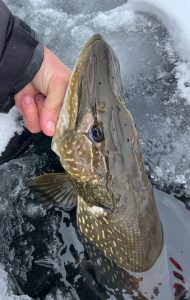
Ice fishing for pike has a funny way of humbling even seasoned anglers. One moment the ice feels quiet and lifeless, the next a flag snaps up and a heavy fish slides onto the hard water. Tip-ups may look simple, but the strategy behind consistently making those flags fly is anything but. With limited mobility, small windows of opportunity, and fish that often move very little, winter pike success comes down to thoughtful location, precise setup, and patience.
Location Is Everything on Hard Water
Location matters in every season, but it becomes absolutely critical once lakes freeze. Ice anglers work with pinholes instead of long casts or trolling passes, meaning baits soak in very specific places for long periods of time. If pike aren’t nearby, even the best presentation won’t save the day.
Because of that limitation, winter is not the ideal time to blindly explore new waters. Lakes with known, healthy pike populations should be the priority. State fisheries surveys, past experience, and local knowledge go a long way toward stacking the odds. Ice fishing rewards confidence in the water being fished.
Within a given lake, edges are king. While pike do roam flats and open basins at times, they are far more predictable along defined drop-offs—especially those that still hold remnants of weed edges. These areas concentrate forage and give pike ambush points whether they are actively feeding or simply waiting.
Not all edges are equal. The best drop-offs are usually adjacent to broad shallow or mid-depth flats that hold baitfish. Even better are edges with contour irregularities: inside turns, sharp bends, and points. Pronounced inside turns along a weed-lined drop-off consistently outproduce straighter stretches, making them prime real estate for tip-ups.
Modern electronics help pinpoint these features, and marking them with GPS or mapping apps before ice-up can pay huge dividends once winter arrives.
Smart Tip-Up Placement
Once a quality edge is chosen, how tip-ups are spread matters. Wide spacing may seem like it covers more water, but it often leaves prime spots untouched. A tighter, more methodical approach usually produces better results.
Multiple holes per tip-up setup—three at minimum, five or more when possible—allow baits to be rotated through shallow, mid-depth, and deeper positions along the same edge. This “peppering” approach keeps presentations close to where pike actually travel, especially on days when fish are inactive.
Depth selection is another critical factor. Pike naturally look upward, so suspending baits too close to the bottom can reduce visibility and lead to snagging in dormant weeds. In shallow water under 10 feet, suspending baits halfway down often works best. In mid-depth zones, baits should ride a bit higher than bottom. In deeper water, placing baits just above vegetation keeps them visible and lively.
Occasionally lifting baits helps remove weeds, refreshes tired minnows, and can even trigger a nearby pike that was watching but hesitant.
Tip-Up Styles and Rigging Details
Most anglers rely on classic spindle-style or windlass-style tip-ups. Both have advantages depending on conditions. Covering holes with rubber mats or built-in covers slows freezing and reduces light penetration, which can spook fish in clear water.
Windlass tip-ups shine on warmer, slightly breezy days. Gentle movement keeps live bait active, but extreme cold, dead calm, or excessive wind can limit their effectiveness. Proper orientation to the wind—and minor paddle adjustments—helps dial in just enough action without overworking the bait.
For rigging, smaller live baits such as 4- to 7-inch shiners or suckers are usually sufficient. A single small treble hook pinned near the dorsal fin paired with a flexible wire or heavy fluorocarbon leader balances stealth with bite protection. Light, cone-shaped slip sinkers help keep baits positioned correctly while allowing pike to run freely.
Staying Mobile Without Rushing
Tip-up fishing rewards movement, but not impatience. If a setup goes 15 to 30 minutes without action, shifting to the next hole is often wise. Productive holes should be marked and revisited, especially after a flag. Proven spots deserve extra time, and if they continue producing, they should stay in the rotation.
Whether fishing solo or with partners, the goal is to eventually settle tip-ups into locations that consistently draw attention. This methodical approach usually limits fishing to one prime area per half day, with slow “leap-frog” moves to nearby edges when necessary.
Let the Flags Fly
Tip-ups may look passive, but success comes from deliberate choices and steady adjustments. Thoughtful location, precise depth control, and disciplined movement transform quiet ice into a stage for sudden action. With these strategies in play, winter days feel shorter, flags fly more often, and hard water becomes one of the most rewarding times to chase northern pike.
Image/Source: midwestoutdoors