Winter transforms lakes into busy playgrounds. In many northern states, frozen water draws just as much activity as open water does in summer. Ice fishing shacks dot the landscape, pickup hockey games form at sunset, and skiers, kiteboarders, and ice sailors take advantage of wide, frozen expanses. The appeal is easy to understand—winter offers freedom, beauty, and a unique way to stay active outdoors.
But ice can be deceptive. What looks solid from shore can quickly become dangerous, and when ice gives way, the situation can turn life-threatening in seconds. According to long-term tracking by the Minnesota Department of Natural Resources, ice-related fatalities average several deaths each year. These incidents are not limited to one activity or one time of winter; they can happen to anglers, skaters, and casual explorers alike.
Enjoying winter on the ice safely comes down to preparation, awareness, and the right equipment.
Understanding the Risks Beneath the Surface
Ice does not freeze evenly. Wind, currents, springs, inflows, and changing temperatures can weaken areas that appear stable nearby. Pressure ridges, cracks, and surface variations are often early warning signs. Conditions can change overnight, meaning ice that was safe yesterday may be dangerous today.
Visibility also plays a major role. Darkness, blowing snow, or fog make it harder to spot weak ice and harder for others to help if trouble arises. Choosing the right time and conditions to venture out is just as important as the activity itself.
Essential Safety Practices for Ice Activities
One of the most effective safety tools is a set of ice picks worn around the neck. If a person falls through, these picks provide the grip needed to pull back onto the ice. Flotation is equally important. Float coats are ideal, but a slim life jacket can also work as long as it does not restrict movement when climbing out of the water.
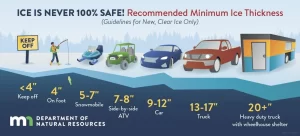
Checking ice thickness is critical. At least four inches of clear, solid ice is generally recommended for foot traffic, though guidelines vary based on activity and weight. Measuring in multiple locations is essential, as thickness can change rapidly across short distances. Speaking with ice anglers or others already on the ice can provide helpful, real-time information about conditions in specific areas.
Going out with others adds both safety and enjoyment. If something goes wrong, help is nearby. Communication matters as well—sharing plans with someone off the ice ensures help can be sent if plans change unexpectedly.
Carrying a throw line allows for safe rescues without approaching unstable ice. A charged cell phone, kept in a waterproof pouch, can be a lifeline in emergencies. These simple tools take up little space but offer significant peace of mind.
Preparation Makes the Difference
Learning what to do before an accident happens is just as important as carrying the right gear. Knowing how to control breathing after falling through ice, how to distribute weight while pulling out, and how to roll away from the hole can dramatically improve survival chances. Watching safety demonstrations or instructional videos ahead of time helps build muscle memory for high-stress situations.
Winter on the ice can be incredible—quiet mornings, wide-open spaces, and a strong sense of community. With the right precautions, those experiences remain positive rather than tragic.
Before heading out this season, take time to review ice safety practices, check local conditions, and gather the proper gear. Share this information with friends and family, encourage safe habits, and make ice safety part of every winter adventure. Preparedness doesn’t just protect individuals—it helps ensure everyone gets home safely to enjoy the rest of the season.
Image/Source: presspubs