Fly fishing has always attracted anglers who enjoy a challenge. Compared to spinning or baitcasting gear, fly rods demand more precision, patience, and practice. Within that already demanding discipline exists an even narrower obsession: convincing a fish to rise and eat a fly on the surface. For many fly anglers, nothing compares to watching a predator explode on a floating offering, and in saltwater, few fish deliver that thrill better than redfish.
There is a certain hierarchy in fly fishing accomplishments. Catching a large fish is rewarding. Catching that same fish on a fly elevates the experience. But seeing a powerful saltwater species willingly charge a surface fly is often considered the pinnacle. Topwater eats provide visual drama, sound, and heart-pounding anticipation that subsurface presentations simply cannot match.
Why Redfish Are Ideal Topwater Targets
Redfish are uniquely suited to the topwater game. Across the Gulf Coast and into the Carolinas, they are one of the most sought-after inshore species. They are abundant, grow large, tolerate imperfect casts, and—under the right conditions—readily feed upward. Their habit of rooting through grass flats for shrimp and crabs makes them especially vulnerable to surface patterns that suggest fleeing prey.
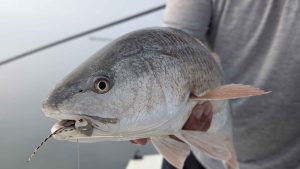
Because they are often aggressive and competitive feeders, redfish are more forgiving than many saltwater species. This makes them approachable for anglers new to the salt while still offering plenty of excitement for seasoned fly fishers.
When Conditions Align
After decades of targeting redfish with traditional subsurface flies, a calm December morning on a South Texas flat changed everything. Fog lingered over slick water, and copper tails waved above the grass as fish fed aggressively. Conditions were ideal: low wind, clear water, and actively feeding reds.
A guide suggested switching from proven bottom-oriented patterns to a simple foam Gurgler. The recommendation came with a caveat—topwater does not always work. But when it does, it can be unforgettable.
Choosing the Right Fly and Retrieve
The Gurgler excels because of its subtlety. Unlike loud poppers, it creates just enough disturbance to get noticed without spooking fish. The retrieve is critical. Short, steady strips create a wake and light surface commotion. The goal is to suggest panic, not chaos.
Accuracy matters more than distance. Redfish are not particularly leader-shy, and placing the fly directly in their path often produces the best response. While the fly can land close to the fish, the fly line should never cross over it, as even aggressive reds have their limits.
Timing the Strike
One of the most exciting parts of topwater redfishing is the eat itself. When redfish rise, their eyes often break the surface first. They may track the fly for several feet before committing. The strike is unmistakable, often marked by a sharp, lip-smacking sound.
Patience pays off. Waiting a brief half-second before executing a strip set leads to more solid hookups and fewer missed fish. Rushing the set is one of the most common mistakes anglers make when fishing on top.
A Visual Experience That Ruins You
The visual payoff is what seals the experience. Watching a redfish roll beneath a waking fly and then explode on the surface leaves a lasting impression. Once experienced, it becomes difficult to return to flies that sink out of sight. Topwater fishing transforms redfish from a target into a spectacle.
Anglers looking to elevate their saltwater fly fishing should consider adding topwater presentations to their skill set. Seek calm conditions, active fish, and knowledgeable guidance to improve success. Practice controlled retrieves, accurate casts, and patience during the strike. Most importantly, get out on the flats, watch for tails, and experience firsthand the thrill of redfish rising to the surface.
Image/Source: hatchmag