For anglers looking to shake up the usual winter routine, burbot offer a cold weather adventure unlike any other. Often called ling or freshwater cod, these strange, eel-like fish are closely related to saltwater cod and are one of the most overlooked species swimming in northern lakes and reservoirs. Many anglers fish waters that hold burbot for years without ever catching one. Winter, however, changes everything.’
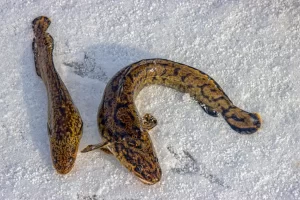
Burbot thrive in cold water and become most active during the harshest months of the year, which conveniently lines up with ice fishing season. While species like walleye and pike slow down, burbot feed aggressively, especially after dark. That nocturnal behavior is exactly why Montana guide Rick Matney spends so many winter nights drilling holes and fishing long after sunset.
According to Matney, burbot are far more common in large reservoirs than small lakes because they prefer deep water for much of the year. During summer, they stay well below the thermocline, making them difficult to target. Once ice forms, they slide shallower to feed and spawn. Most winter burbot are caught in water less than 30 feet deep, though some are pulled from as little as six feet, particularly over gravel, sand, or muddy bottoms.
Finding the right location is critical. Sloping edges that drop into deep water are ideal starting points. If there is any sign of spawning habitat nearby, the odds improve even more. Matney offers one simple rule that saves time and effort. If a burbot shows up during daytime jigging for walleye, that spot deserves serious attention once darkness falls. A few early fish often signal a much larger nighttime gathering.
Unlike other ice species, burbot are not easily patterned with wide spreads of tip ups. While they will hit live bait, Matney says consistent success comes from fishing aggressively with jigs that appeal to their senses. Burbot rely heavily on sound and smell when feeding, especially at night when visibility is low.
Heavy jigs are the name of the game. In the past, anglers relied on large saltwater jigheads tipped with chunks of sucker meat. Today, several companies produce burbot specific jigs that feature rattles, multiple hooks, and glow paint. These designs help call fish in from a distance and keep their attention once they arrive.
Matney recommends pounding the bottom hard. Stirring up silt and mud creates noise and disturbance that draws curious burbot into the area. The jig should be tipped with the stinkiest bait available. Strips of sucker meat are a favorite, though cisco and other legal baitfish work just as well. Freshness matters less than scent, and messy baits often outperform clean ones.
Color choice is far less important than many anglers assume. White jigs and glow white jigs are consistent producers, even before full darkness sets in. One detail that should never be overlooked is keeping glow jigs charged. After 10 to 15 minutes on the bottom, a quick hit with a headlamp or black light can dramatically increase strike rates.
Ice fishing for burbot is cold, often late, and sometimes uncomfortable, but it delivers nonstop action when conditions line up. For anglers willing to trade sleep for screaming reels and heavy fish on the ice, burbot fishing might just become winter’s most addictive pursuit.
Image/Source: OL