Tip-up fishing is one of the most effective and time-tested methods used on frozen lakes, especially when targeting large, cold-water predators like northern pike, lake trout, and even perch. While the setup may appear simple at first glance, experienced ice anglers know that properly rigged and maintained tip-ups can make the difference between a slow day and steady action.
What Is a Tip-Up?
A tip-up is a mechanical ice fishing device designed to suspend live or dead bait beneath the ice while signaling an angler when a fish bites. Most traditional tip-ups are built with crossed wooden beams that rest over the ice hole, a spool that holds fishing line below the surface, and a spring-loaded flag that trips when the spool turns. When a fish takes the bait and pulls line, the flag pops up, alerting anglers from a distance.
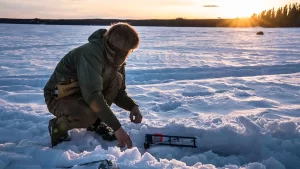
This hands-off approach allows anglers to cover multiple depths and locations at once, making tip-ups ideal for scouting large areas or fishing during harsh winter conditions.
Why Tip-Ups Are So Effective
Unlike rod-and-reel ice fishing, tip-ups present almost no resistance when a fish takes the bait. That free-spooling design allows cautious species like pike or trout to run naturally before the hook is set. This leads to better hookups, especially when using live bait.
Quality tip-ups also remain functional in extreme cold, wind, and snow. Well-built wooden models resist freezing and icing far better than inexpensive plastic versions, which are prone to malfunctions. On stormy days, tip-ups can be monitored from the shelter of a portable ice shanty, extending fishing time and comfort.
Setting Up a Tip-Up Properly
Successful tip-up fishing begins with correct depth placement. Many anglers use a clip-on depth sounder to quickly find bottom. Once the desired depth is identified, a small button or bead is often threaded onto the main line above the leader to act as a precise depth marker. This ensures bait is returned to the same strike zone even after long runs.
Live bait is typically hooked just behind the dorsal fin to allow natural movement. Jumbo shiners are common for pike, while smaller minnows work well for perch and trout. Once bait is lowered, the flag is set and tested to confirm the trigger releases smoothly.
Trap positioning also matters. The spool should face open water inside the hole and never rub against ice edges. Obstructions can cause line jams, especially when large fish hit aggressively.
Choosing the Right Tip-Up for the Job
Not all tip-ups serve the same purpose. Large, heavy-duty wooden models with high line capacity are preferred for big fish that make long runs. Smaller, lightweight plastic tip-ups can be useful early in the season for panfish or trout but are less reliable in deep snow or high wind.
Visibility is another key factor. Taller flags are easier to spot from a distance, especially during low-light conditions or snowstorms. Low-profile traps may disappear once snow accumulates.
Maintenance and Fish Handling
Proper maintenance extends the life of tip-ups and improves performance. After landing a fish, line should be rewound using the spool rather than by hand to prevent twists and coils. Hooks should be stored in holders to avoid tangles, and traps should be dried thoroughly after each outing to prevent ice buildup and line damage.
When fighting larger fish, one angler should focus on the line while another manages loose coils and the spool. This teamwork prevents snarls and reduces the risk of losing fish during sudden runs.
At the end of the day, traps should be inspected for loose hardware and stored in protective sleeves if possible. Drying line indoors helps prevent freezing and prolongs its lifespan.
A Proven Ice Fishing Tool
Tip-up fishing blends simplicity with strategy. From depth control and bait selection to trap placement and maintenance, every detail plays a role in success. For anglers willing to invest time in learning the fundamentals, tip-ups offer one of the most exciting and productive ways to fish through the ice. Few moments in winter fishing compare to spotting a flag flying against a frozen lake and knowing a fish is on the line.
Image/Source: MeatEater