Winter fly fishing can be one of the most skill-building and rewarding seasons on the water. Cold temperatures change fish behavior, angler pressure, and river conditions. Keeping a few core principles in mind can help anglers stay safe, comfortable, and productive during the coldest months of the year.
1. Many Rivers Stay Open All Winter
Most moving water does not fully freeze, especially tailwaters flowing from dams. These systems often maintain stable water temperatures year-round. The closer an angler fishes to a dam, the less likely ice will be an issue.
2. Expect Fewer Anglers on the Water
Winter naturally reduces fishing pressure. Popular summer rivers often become quiet and peaceful. This allows anglers to cover more water and fish productive areas without crowding.
3. Start Later in the Day
Fish are typically less active early in the morning during winter. Mid-morning through mid-afternoon is usually the most productive window. There is rarely a need to rush onto the river at sunrise.
4. Slow Everything Down
Cold water slows fish metabolism. Presentations should be slower and more controlled. Let nymph rigs fully complete drifts, retrieve streamers slowly, and move carefully to avoid spooking fish in clear winter water.
5. Use Lighter, Subtler Setups When Possible
Low, clear winter flows make fish more cautious. Dropping down a tippet size can improve success. Smaller strike indicators or tight-line techniques can also reduce fish spooking. Avoid overdressing feet with too many socks, since restricted circulation can make feet colder.
6. Pack Extra Layers and Supplies
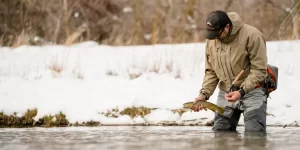
Winter requires more preparation. Dress in layers similar to skiing or snow sports. Pack extra gloves, warm drinks, and emergency gear. Staying warm allows anglers to stay focused and fish longer.
7. Protect Expensive Gear
Freezing guides and reels can damage high-end rods and equipment. Consider using durable backup gear when fishing in sub-freezing conditions to reduce risk.
8. Always Carry Midge Patterns
Midges remain active in winter and can make up a large portion of a fish’s diet. Midge larva, pupa, and emerger patterns are often some of the most reliable winter producers.
9. Add More Weight Than You Think You Need
Cold fish hold tight to the bottom. Extra split shot helps flies reach the strike zone. Getting flies deep enough is often the difference between slow days and productive ones.
10. Watch for Winter Hatches
Blue wing olives and stoneflies can still hatch during warming trends or weather changes. Carrying winter dry flies can create rare but incredible topwater opportunities.
Winter fly fishing separates casual anglers from dedicated ones. Put these tips into practice on your next cold-weather trip and see how productive winter fishing can be. Share these tips with fishing partners, save them for your next trip, and get out on the water before spring crowds return.
Image/Source: backcountry