
A proposed update to Canada’s salmon allocation policy could significantly alter recreational fishing opportunities in British Columbia. Fisheries and Oceans Canada (DFO) is reviewing a framework that has guided salmon management since 1999, and two suggested changes have raised concern among anglers who target Chinook and Coho salmon.
At the center of the debate is a proposal to remove language that defines salmon as a public, or “common property,” resource. A second proposal would reorder harvest priorities, placing recreational fishing behind other sectors when it comes to access and allocation.
To better understand the potential impacts, MeatEater spoke with Jesse Zeman, Executive Director of the BC Wildlife Federation. Zeman explained that classifying salmon as a common property resource aligns with long-standing conservation principles similar to the North American Model of Wildlife Conservation. Under this concept, fish are publicly owned and managed in trust by the federal government for the benefit of all citizens.
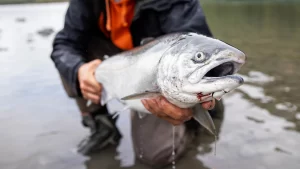
Removing that designation, Zeman argues, would fundamentally change the public’s relationship with the resource. Without clear recognition of public ownership, questions arise about who controls access to salmon and who ultimately decides who gets to fish. Recreational anglers, whose rights are rooted in common law rather than the Canadian Constitution, could see their long-standing access weakened or redefined as a privilege rather than a right.
Support for revisiting the policy has come primarily from First Nations groups. DFO documents indicate that some Indigenous representatives view the “common property resource” concept as a colonial framework that has undermined traditional governance and stewardship practices. They also argue that modern fisheries management no longer reflects the intent or relevance of the 1999 policy language.
In Canada, First Nations are constitutionally guaranteed priority access to fish for food, social, and ceremonial purposes. Recreational fishing does not hold the same constitutional standing, relying instead on historical legislation such as the Fisheries Act of 1868. This distinction makes sport fishing particularly vulnerable to policy changes.
Compounding these concerns is a second proposal that would remove the current priority given to recreational anglers over commercial fisheries for Chinook and Coho salmon. Under the existing system, sport fishing is permitted first, with commercial harvest allowed only when fish abundance supports it. The proposed change would introduce catch caps or limits on recreational fishing to expand commercial opportunities, even in years with weaker salmon runs.
Zeman warns that such a shift could have major economic consequences. Recreational fishing in British Columbia supports thousands of jobs and contributes more than a billion dollars annually to the provincial economy. License fees from anglers also fund conservation initiatives, including habitat restoration, hatcheries, and research projects that directly benefit salmon populations.
While the public comment period has closed, DFO plans to continue consultations with stakeholder groups. The BC Wildlife Federation is organizing town halls across the province to keep anglers informed and engaged as discussions continue.
Ultimately, final decisions will rest with federal leadership, and the outcomes could shape the future of salmon fishing in British Columbia for decades. For anglers and conservation advocates alike, staying informed and involved will be critical as these proposals move closer to becoming policy.
Image/Source: MeatEater