As winter settles in, rivers undergo dramatic changes that directly affect fish behavior. Falling water temperatures, reduced daylight, and ice cover force many species to abandon their summer ranges and seek out areas that offer stability and survival. Research conducted by fisheries biologists has shown that backwaters play a critical role in helping fish endure harsh winter conditions, especially in large river systems.
Biologists with the Iowa Department of Natural Resources spent more than a decade tracking crappies and bluegills in pools along the Mississippi River to better understand winter habitat use. By implanting radio transmitters in fish during the fall, researchers were able to follow seasonal movements through ice-up and into late winter. The results revealed consistent and predictable behavior tied closely to water temperature and habitat features.
During summer, crappies and bluegills were widely distributed, using side channels, slack water, and areas away from the main navigation channel. As fall approached and water temperatures dropped below roughly 50°F, these fish began moving toward the entrances of backwaters. By the time ice formed, nearly all tracked fish had relocated into protected backwater areas.
Not all backwaters are equal. The most productive winter habitats shared several key characteristics. Ideal backwaters had little to no current, adequate dissolved oxygen, and water temperatures slightly warmer than the main river—typically 2 to 5 degrees warmer. Depth also mattered. Backwaters at least six feet deep were used more frequently, as deeper water under ice allows temperatures near the bottom to remain close to 39°F, which is optimal for many species during winter.
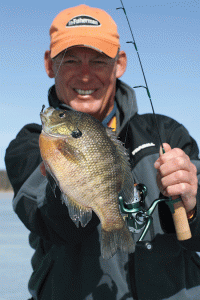
Structure within these backwaters proved just as important as water conditions. Crappies and bluegills showed strong preferences for cover, congregating around submerged vegetation, fallen trees, docks, pilings, and marina infrastructure. Depending on what was available, fish adapted to different types of structure, but rarely stayed in open water for long.
These findings are valuable not only for fisheries managers but also for anglers. Protecting and restoring backwater habitats helps maintain healthy fish populations, while anglers who understand winter habitat can more effectively locate fish during the coldest months. Consistent use of the same backwaters year after year also highlights the importance of conserving these areas from sedimentation, pollution, and development.
Anglers and conservation-minded outdoorsmen can make a difference by supporting habitat restoration efforts and learning to fish responsibly in winter backwaters. Explore local conservation programs, stay informed about river management, and share this knowledge to help protect the places fish depend on most during winter.
Image/Source: In-Fisherman