Sight fishing often relies on clear visibility, but overcast skies do not have to end a productive day on the water. Cloud cover, rain, and low light can make spotting fish more difficult, yet small adjustments in approach can still lead to success. Lessons learned from fishing tropical flats, including those around Christmas Island, show that adapting technique makes all the difference when conditions are less than ideal.
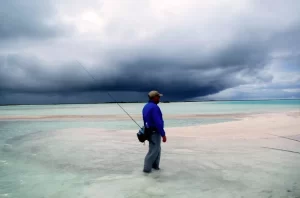
These five practical tips can help anglers find and catch fish even when visibility is limited.
1. Use Yellow-Tinted Polarized Lenses
Low-light conditions require better contrast, not just glare reduction. Yellow-tinted polarized lenses can significantly improve visibility on cloudy or rainy days. These lenses enhance contrast and make subtle movements in the water easier to detect.
Even on partly cloudy days, switching to yellow lenses can make fish stand out more clearly. When sight fishing becomes difficult, this small gear change can make a noticeable difference.
2. Slow Down the Approach
Cloudy conditions reduce visibility, often cutting sight range in half. Fish that might be visible from 60 or 80 feet on a bright day may only be detectable at 30 or 40 feet.
Moving too quickly across shallow water increases the chance of spooking fish. Quiet wading becomes essential. Slowing down to at least half speed reduces noise, minimizes disturbance, and improves the chances of getting within casting range without alerting fish.
3. Focus on Movement, Not Full Fish
Instead of searching for clearly defined fish shapes, focus on subtle signs in the water. On cloudy days, surface disturbances often reveal fish before the fish itself becomes visible.
Look for wakes, pushes, nervous water, or brief flashes like a tail or fin breaking the surface. In freshwater environments, watch for rise forms or slight ripples that indicate feeding fish. Reading the water becomes more important than trying to see through it.
4. Take More Chances on Uncertain Targets
Perfect visibility allows for selective, precise casts. Cloud cover removes that luxury. When visibility is limited, waiting for a guaranteed shot can mean missing opportunities.
If a movement or shape looks like it could be a fish, it is often worth making the cast. Even imperfect presentations can trigger a strike. Increasing the number of attempts can help compensate for reduced visibility.
5. Give Fish Time to Settle
Low-light conditions can work in an angler’s favor. Fish often have a harder time seeing movement above the water, which means they may not spook as easily or stay alarmed for long.
If a fish is disturbed, watch its behavior. Many fish will settle back into feeding or cruising patterns once the initial disturbance passes. Knowing the fish’s location provides a second chance. A well-placed follow-up cast can still produce a bite.
Cloudy and rainy days can challenge even experienced anglers, but they also present unique opportunities. By adjusting gear, slowing down, and focusing on subtle cues, sight fishing can remain productive even when visibility is poor. Next time the sky turns gray, do not pack up early. Apply these adjustments, stay patient, and treat low-light conditions as an opportunity to sharpen skills and catch fish that others might overlook.
Image/Source: F&S