Fishing gear gets plenty of attention, but one of the most important pieces often gets overlooked: the humble fishing hook. Every fish caught starts with the right hook, and choosing the wrong one can mean missed strikes, bent metal, or lost trophies. It may look simple, but hooks come in a wide range of styles designed for everything from tiny panfish to offshore giants.
From regulations requiring barbless designs to specialized hooks built for certain techniques, understanding the options can make a huge difference on the water. This guide breaks it all down in a fun and easy way so every angler can fish smarter.
Why Fishing Hooks Matter More Than You Think
At its core, a hook has two jobs: penetrate the fish’s mouth and stay put. Sounds easy, but things get complicated quickly depending on species and conditions.
A small-mouthed crappie needs a tiny, razor-sharp hook that sets with minimal pressure. A toothy pike demands a thick, durable hook that can handle aggressive strikes and powerful fights. Matching the hook to the target species is the first step toward success.
The Main Types of Fishing Hooks
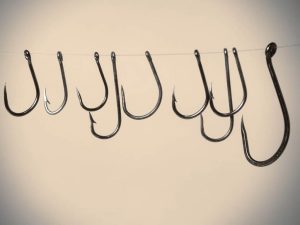
Walk down any tackle aisle and the number of hook options can feel overwhelming. Thankfully, most hooks fall into a few key categories.
Bait Hooks
The classic design. Straight shank, simple shape, and often equipped with barbs along the shank to hold bait securely. Available in multiple sizes and gap styles, making them a reliable all-around option.
Worm Hooks
Designed with a wide gap and a distinct bend near the eye, these hooks are perfect for soft plastics and live worms. The shape keeps baits in place while allowing solid hooksets.
Circle Hooks
With a rounded bend and sharp point, circle hooks excel when fish are biting lightly. Instead of a hard hookset, the hook slides into the corner of the fish’s mouth and holds tight. Great for live or dead bait presentations.
Jig Hooks
These hooks come with a built-in weight molded near the eye, creating an all-in-one setup. Ideal for soft plastics, feathers, or natural bait, jig hooks are incredibly versatile and easy to use.
Octopus Hooks
Short shank, curved design, and an upturned eye make these hooks excellent for snelling. They work well across many species and are a favorite for both bait fishing and certain fly patterns.
Siwash Hooks
Featuring an open eye, these hooks are designed for quick attachment to lures. A great option when replacing treble hooks with a single hook setup.
Double and Treble Hooks
Multiple points increase hookup chances, especially with moving lures. However, they can cause more damage to fish, making them less ideal for catch-and-release situations.
Fly Fishing Hooks
An entire world of options exists here. From dry flies to streamers, hook designs vary in length, thickness, and eye position. Freshwater and saltwater versions differ as well, with corrosion resistance being key for saltwater use.
Barbed vs Barbless: What’s the Deal?
Barbs help keep fish pinned and prevent hooks from slipping out, which is great when landing fish is the priority. However, they can cause more damage and make hook removal tougher.
Barbless hooks, on the other hand, are easier on fish and often required in certain fisheries. They also make unhooking quicker and safer. Barbs can be pinched down with pliers to create a barbless option when needed.
Understanding Hook Sizes
Hook sizing can feel confusing at first, but it becomes simple with a little practice.
-
Standard sizes run from about 1 to 30, with larger numbers meaning smaller hooks
-
The “aught” system (1/0, 2/0, etc.) works in reverse, where bigger numbers mean larger hooks
For example, a size 4 hook is larger than a size 10, while a 3/0 hook is larger than a 1/0.
Hook gap also plays a role. Wide-gap hooks provide more room for thicker baits, while narrow gaps work better for smaller presentations.
Know the Parts of a Hook
Understanding hook anatomy helps with selecting the right design for different techniques.
-
Eye: Where the line attaches
-
Shank: The straight section below the eye
-
Bend: The curve leading to the point
-
Point: The sharp end that penetrates the fish
-
Barb: The backward-facing point that helps hold the fish
-
Gap: The space between the shank and the point
Each part affects how the hook performs in the water.
Quick Tips for Choosing the Right Hook
-
Match hook size to bait and target species
-
Use lighter hooks for finesse fishing and heavier ones for big fish
-
Keep hooks razor sharp at all times
-
Carry multiple styles to adapt to changing conditions
Final Cast
Fishing hooks might not get the same attention as rods and reels, but they play a critical role in every catch. With the right hook in the tackle box, landing fish becomes easier and more consistent.
Experiment with different styles, pay attention to conditions, and keep a variety of options on hand. A well-chosen hook can turn a slow day into a memorable one in a hurry.
Image/Source: fishingbooker