Early spring trout fishing offers a valuable opportunity to refine technique, especially during the ice-out period when fish behavior is heavily influenced by water temperature, clarity, and available forage. One of the most overlooked yet highly effective adjustments anglers can make during this time is switching from traditional baitfish imitations to brightly colored streamer patterns.
A recent series of outings on small lakes and waterways demonstrated a consistent trend. When multiple anglers fished the same water using different presentations, those casting or trolling vivid, high-visibility streamers experienced significantly more strikes and landed more trout than those using natural-looking patterns.
Understanding Trout Behavior in Early Spring
During ice-out, water temperatures are typically in the low 40s to low 50s. Trout remain active but are often holding at specific depths where temperatures are slightly more stable. In many cases, fish suspend in the water column rather than hugging the bottom or cruising the surface.
Water clarity during this period is often reduced due to runoff, debris, and lingering organic matter. These conditions make it harder for trout to locate subtle, natural-colored flies. Bright streamers, on the other hand, increase visibility and trigger reaction strikes, even from fish that are not aggressively feeding.
Additionally, trout metabolism is still adjusting after winter. While they are willing to eat, they often respond better to presentations that are easy to detect and require minimal effort to pursue.
Why Bright Streamers Work
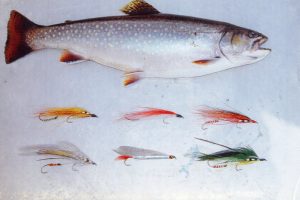
Bright attractor patterns are designed to stand out rather than imitate a specific prey item. Instead of relying on realism, these flies provoke instinctive responses such as curiosity, territorial behavior, or aggression.
Common productive color combinations include:
- Red and white
- Orange and yellow
- Blue with silver accents
- Multi-colored feather and bucktail blends
Patterns like little brook trout, Ouananiche sunset, and blue devil consistently outperform traditional streamers in early-season conditions because they remain visible in stained water and mimic movement rather than exact appearance.
Presentation Matters
Using the right fly is only part of the equation. Presentation plays a critical role in success:
- Depth Control: A sinking-tip fly line helps keep the streamer in the strike zone, especially when fish are holding 10 to 20 feet below the surface.
- Speed: Slow trolling or a steady retrieve allows the fly to maintain a natural but noticeable action.
- Action: Subtle rod movements can add life to the streamer, making it appear like an injured or fleeing baitfish.
In many cases, trout strike shortly after the fly is introduced into the water or during changes in speed or direction.
Breaking the Habit of “Confidence Flies”
Many anglers rely on a small group of trusted patterns developed over years of fishing. While these flies can be effective, overreliance can limit adaptability. Fishing alongside others using different patterns often reveals that less familiar, brighter flies can outperform traditional choices by a wide margin.
A useful guideline is to monitor results closely. If no strikes occur within 30 minutes, changing fly patterns can dramatically improve success rates. This simple adjustment encourages experimentation and helps identify what fish are responding to on a given day.
Matching Gear to Conditions
For small ponds and streams, single-hook streamers in sizes 6 to 10 are ideal. On larger lakes and rivers, tandem streamer rigs provide a bigger profile and can attract larger fish.
Anglers who tie their own flies should consider adding a selection of brightly colored materials to their inventory. These patterns are not overly complex and can be customized for different environments.
Key Takeaways for Early-Season Success
- Trout rely more on visibility than realism in stained, cold water
- Bright streamers trigger reaction strikes more effectively than natural patterns
- Depth and presentation are just as important as fly selection
- Regularly changing flies increases the chances of finding a productive pattern
Want to improve trout fishing results this spring? Add a few bright streamers to the lineup, focus on depth and visibility, and apply these principles on the next trip to turn slow days into consistent action.
Image/Source: thecounty