Conservation-minded anglers often debate whether keeping a trophy-sized crappie is harmful to a fishery. While releasing large bass is widely encouraged because of their importance to spawning populations, crappie management is far more complicated and depends heavily on the region and the specific body of water.
Fisheries biologists in Texas and Wisconsin recently shared insights that reveal just how different crappie populations can be across the country. Their perspectives show there is no universal rule for what size crappie anglers should keep or release.
In southern fisheries like Texas, crappie grow quickly and live relatively short lives. Some lakes produce fish that reach legal size and sexual maturity within a single year. By the time crappie are two years old, many are already over 10 inches and actively reproducing. In these systems, the average lifespan often ranges between three and five years.
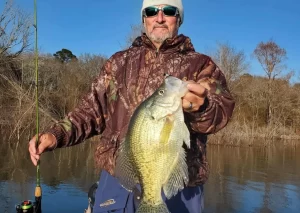
Biologists managing these lakes explain that although large crappie produce significant numbers of eggs, younger fish are still highly capable of sustaining healthy populations. Because of the rapid growth and shorter lifespan of southern crappie, keeping larger fish generally does not have the negative impact many anglers assume.
In fact, trophy-sized crappie in some southern lakes may already be near the end of their natural lifespan. Fisheries managers in these areas often focus more on overall population balance than protecting oversized fish. In overcrowded lakes, anglers may even be encouraged to harvest smaller fish to improve growth rates across the fishery.
That approach changes dramatically in northern states like Wisconsin.
Crappie populations in colder northern waters behave much differently due to inconsistent spawning success and slower growth rates. Northern fisheries can experience strong “boom-or-bust” population cycles where one successful spawning year supports the fishery for several seasons afterward.
As those strong year classes age, they often become the backbone of the lake’s crappie population. Removing too many fish from a single size group can reduce the long-term quality of the fishery. Unlike southern crappie, northern fish can live much longer, with some reaching well over a decade in age.
Growth rates also vary significantly from lake to lake. In some northern waters, a nine-inch crappie may only be a couple years old, while in others it could take much longer for fish to reach that size. Because of these differences, fisheries managers often avoid applying the same regulations universally across all lakes.
Biologists in northern regions tend to focus less on the exact size of harvested crappie and more on the total number anglers keep. Rather than harvesting a full limit of large fish, anglers are encouraged to spread harvest across multiple size classes and consider taking fewer fish overall.
The discussion highlights how fisheries management depends heavily on local conditions. Water temperature, growth rates, spawning success, forage availability, and fishing pressure all influence how crappie populations respond to harvest.
What works well for a fast-growing southern reservoir may not work at all for a natural northern lake.
For anglers hoping to protect local fisheries while still enjoying a fish fry, the best approach is often to learn about the specific lake being fished. State fisheries agencies and regional biologists typically provide guidance based on current population data and management goals.
At the end of the day, responsible crappie harvest is less about following a one-size-fits-all rule and more about understanding the unique needs of each fishery. Thoughtful harvest decisions, combined with local knowledge, help ensure strong crappie populations remain available for future generations of anglers.
Image/Source: OL