Trout fishing has no shortage of bait options. Walk into any tackle shop and anglers will find shelves packed with dough baits, artificial eggs, worms, minnows, scented plastics, flies, and countless other trout-catching products. While many of these baits can catch fish occasionally, experienced trout anglers know that some baits consistently outperform the rest.
According to longtime river guides and seasoned trout fishermen, the biggest mistake many anglers make is relying on low-percentage baits instead of proven natural presentations that trout regularly feed on.
The difference often comes down to understanding trout behavior and matching the natural food sources trout already expect to see in the water.
High-Percentage Baits Catch More Trout Consistently
Experienced trout anglers often separate baits into two categories: high-percentage baits and low-percentage baits.
High-percentage baits are natural food sources trout actively feed on most of the time. These baits consistently produce strikes in a wide variety of conditions and across multiple trout species.
Low-percentage baits may still catch fish occasionally, but they tend to work inconsistently or only under specific circumstances.
Many beginner anglers spend too much time experimenting with trendy baits that produce random success instead of focusing on proven options that work year after year.
Garden Worms Remain One of the Best Trout Baits
Simple garden worms continue to rank among the most effective trout baits available.
Small red worms, red wigglers, and smaller dew worms closely resemble natural food trout already encounter in rivers, streams, ponds, and lakes. Their natural movement in the water makes them extremely difficult for trout to ignore.
Experienced anglers often rig worms naturally instead of bunching them tightly onto the hook. Allowing part of the worm to move freely creates a more realistic presentation that triggers more bites.
Hook selection also matters. Many trout anglers prefer smaller, sharp hooks that improve hook-up percentages and present bait more naturally.
Aquatic Insects Are a Natural Food Source
Trout feed heavily on insects throughout the year, especially in rivers and streams.
Stoneflies, mayfly nymphs, caddis larvae, hellgrammites, and other aquatic insects make up a major portion of a trout’s natural diet. Artificial flies that imitate these insects often perform just as well as live bait when presented properly.
Terrestrial insects like grasshoppers, crickets, beetles, and ants can also become highly effective during warmer months when they fall into the water naturally.
Many experienced trout anglers consider insect imitations some of the most reliable baits for both small trout and trophy-sized fish.
Minnows Trigger Aggressive Trout
Larger trout regularly feed on baitfish.
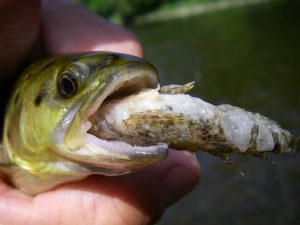
Live minnows, dead minnows, and preserved baitfish can all produce excellent results in lakes and rivers, especially when targeting larger brown trout, lake trout, and trophy rainbow trout.
Minnows between two and four inches long are often the most productive sizes. They imitate injured or vulnerable baitfish and trigger predatory feeding instincts in bigger trout.
In many fisheries, baitfish become especially effective during colder water periods when trout focus on larger meals.
Grubs and Larvae Continue Producing Fish
Wax worms, mealworms, maggots, and other grub-style baits remain popular for good reason.
These smaller baits work well in lakes, ponds, rivers, and streams because they resemble common forage trout naturally encounter near the bottom or drifting in current.
Artificial grub imitations can also work extremely well under floats or lightly weighted rigs in moving water.
For stocked trout, smaller natural baits often outperform larger presentations.
Fish Eggs Are Deadly During Spawning Seasons
Salmon eggs and trout eggs become incredibly productive during spawning periods.
Single eggs or spawn sacks imitate loose eggs drifting naturally downstream, making them highly attractive to trout feeding behind spawning fish. These baits perform especially well during spring and fall runs in rivers and tributaries.
Even outside of spawning periods, trout often continue responding aggressively to egg presentations because they provide an easy, high-protein food source.
Artificial trout beads designed to imitate eggs have also become extremely popular among river anglers targeting steelhead and larger trout.
Leeches and Crayfish Target Bigger Trout
Larger trout often prefer bigger meals.
Live leeches can be extremely effective because of their natural movement underwater. Artificial leech imitations also produce excellent results in rivers and lakes, particularly in deeper pools and slower current.
Crayfish are another overlooked trout bait. Many large trout actively hunt crayfish near rocky bottoms and structure. Smaller crayfish hooked through the tail remain lively longer and create a more natural presentation.
These larger bait options often appeal to mature trout searching for calorie-rich meals.
Plastic Trout Worms Have Become Extremely Popular
Soft plastic trout worms continue gaining popularity among serious river anglers.
Bright colors like pink, red, and natural earth tones can all produce strikes depending on water conditions. These baits excel in moving water and are commonly drifted under floats or along current seams.
Many anglers report that plastic worms consistently produce some of the biggest trout of the season, especially in pressured rivers where fish see the same presentations repeatedly.
Presentation Often Matters More Than the Bait
One of the biggest lessons experienced trout anglers emphasize is that presentation matters just as much as bait selection.
Poor drifts, unnatural movement, heavy line, or sloppy presentations can prevent trout from biting even the best bait. Trout may not be highly intelligent, but they are cautious and quickly recognize presentations that look unnatural.
Experienced anglers frequently change bait styles when fishing pressured water where trout have already seen the same presentation repeatedly throughout the day.
Sometimes simply switching to a different size, color, or type of bait can completely change the outcome.
Focus on Proven Trout Baits
Trout will occasionally strike almost anything that resembles food, but consistent success usually comes from relying on natural, high-percentage baits that closely match local forage.
Worms, insects, minnows, fish eggs, grubs, leeches, and crayfish continue producing trout year after year because they imitate what trout naturally feed on every day.
The next time the bite slows down, focus less on gimmicks and more on natural presentations, proper bait movement, and matching local conditions. Small adjustments often make the biggest difference when targeting trout in any season.
Image/Source: ontariotroutandsteelhead