Rivers can seem confusing to anglers who are unfamiliar with moving water. Current changes constantly, water levels shift with weather, and fish rarely stay in one place for long. But experienced river anglers understand that rivers follow predictable patterns, and learning how to read those patterns can dramatically improve fishing success.
Whether targeting trout, smallmouth bass, walleye, catfish, pike, or panfish, understanding current, structure, and seasonal fish movement is one of the biggest keys to consistently catching fish in rivers and streams.
Current Controls Everything in a River
The single most important feature in any river system is current.
Current determines where fish feed, rest, travel, and conserve energy. Fish rarely hold in fast, featureless current for long periods because fighting heavy flow burns too much energy. Instead, they position themselves near areas that bring food while offering protection from strong water movement.
These locations are commonly known as current breaks.
Before making a cast, experienced anglers often spend time simply watching the water. Changes in flow speed, swirling water, and calm pockets all provide clues about where fish are likely holding.
Understanding Pools, Riffles, and Runs
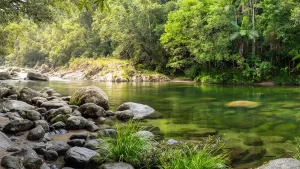
Most rivers can be broken down into three main sections: pools, riffles, and runs.
Pools
Pools are deeper sections of the river where current slows down. These areas are commonly found near outside bends, below rapids, or at the end of faster stretches of water.
Pools often hold multiple species because they provide safety, stable temperatures, and resting areas. During colder months, many fish gather in deeper pools to conserve energy.
Riffles
Riffles are shallow, fast-moving sections where water flows quickly over rocks or gravel.
These areas contain high oxygen levels and often attract trout and smallmouth bass. Aquatic insects thrive in riffles, making them productive feeding areas for fish that actively hunt drifting food.
Although riffles may appear too shallow, they can hold surprising numbers of fish under the right conditions.
Runs
Runs are moderate-flow sections that connect pools and riffles.
These stretches usually feature steady current with fewer obvious depth changes. Fish often use runs as travel routes while moving between feeding and resting areas.
While runs may look less exciting than pools or riffles, subtle seams and structure within them can still hold active fish.
Current Breaks Hold Feeding Fish
One of the most important river fishing concepts is identifying current breaks.
Fish position themselves in areas where current slows while food continues drifting nearby. These spots allow fish to feed efficiently without expending unnecessary energy.
Eddies
Eddies form behind rocks, logs, bridge pilings, and bends where water swirls into calmer pockets.
Baitfish frequently collect inside these slower-moving areas, making them excellent feeding zones for trout, bass, walleye, and other species.
Current Seams
Current seams are the transition lines where fast water meets slower water.
Fish often hold directly along these seams because food naturally funnels through them. Many experienced anglers target seams first when approaching a new river section.
Backwaters
Backwaters are calm areas disconnected from the heaviest current.
These locations commonly attract baitfish, panfish, largemouth bass, pike, and catfish, especially during warmer months when fish seek slower water.
Different River Sections Hold Different Fish
As rivers change from small headwaters to larger downstream systems, fish species and structure change as well.
Headwaters
Upper river sections are typically narrow, rocky, and oxygen-rich.
These cold-water environments are ideal for trout and smaller smallmouth bass. Productive areas often include undercut banks, small plunge pools, and rocky runs.
Mid-River Sections
As rivers widen and deepen, species diversity increases.
Smallmouth bass, walleye, catfish, pike, and larger trout commonly share these waters. Deep outside bends, logjams, rock piles, and submerged timber become key fish-holding structure.
Lower River Systems
Lower sections of rivers usually feature slower current, softer bottoms, and deeper channels.
These areas often hold largemouth bass, catfish, freshwater drum, walleye, and pike. Channel edges, bridge areas, tributary mouths, and deep holes frequently become major feeding locations.
Structure and Cover Create Fish-Holding Areas
Once anglers understand river flow, the next step is identifying structure and cover.
Structure refers to changes in the river bottom such as drop-offs, rock piles, or sandbars. Cover includes objects like logs, weeds, docks, or submerged trees that provide shelter and ambush points.
Rocks and Boulders
Rocks create current breaks, shade, and feeding lanes.
Smallmouth bass especially love rocky current areas where crayfish and baitfish gather.
Fallen Trees and Logs
Laydowns and logjams provide protection from current while creating ambush opportunities for bass, catfish, and pike.
Weed Beds
Slower sections of rivers often develop weed growth during warmer months.
These areas attract baitfish and provide excellent cover for largemouth bass and northern pike.
Sandbars and Drop-Offs
Sandbars create natural feeding lanes where predators wait for baitfish moving with the current.
Walleye and bass frequently patrol these transition zones.
Seasonal River Fishing Patterns Matter
Fish behavior changes throughout the year, and river anglers must adjust accordingly.
Spring
During spring, many fish move into shallower areas to spawn.
Current seams, gravel flats, flooded timber, and protected backwaters become major feeding and spawning locations.
Summer
Warm summer water often pushes fish toward deeper holes, shaded areas, and faster-moving water with higher oxygen levels.
Early mornings and evenings usually provide the best fishing during hot weather.
Fall
Fall creates some of the best river fishing of the year.
Baitfish gather in large schools, and predator fish aggressively feed before winter. Multiple species often stack together in current breaks and feeding lanes.
Winter
Cold-water periods push fish into the deepest and slowest sections of the river.
Feeding windows may become shorter, but patient anglers can still find success during warmer parts of the day.
Match Presentations to River Conditions
Different species prefer different techniques, but natural presentation remains critical in moving water.
Bass anglers often target seams and rocky structure with soft plastics, jigs, and crankbaits. Walleye commonly hold near deeper current edges where live bait rigs and jigs perform well.
Catfish frequently gather near deep holes and slower bends where cut bait excels. Trout anglers usually drift flies, worms, or small lures naturally with the current through pools and riffles.
Casting upstream and allowing bait to move naturally with the flow often produces the most realistic presentation.
Learn to Observe the Water
The best river anglers spend as much time observing as they do casting.
Swirling water behind rocks, baitfish movement near seams, and subtle changes in current direction all reveal important information about where fish are holding.
Rivers are not random. They follow predictable patterns shaped by current, structure, oxygen, and seasonal movement.
Once anglers learn to read those patterns, nearly every river becomes easier to understand, and finding fish becomes far more consistent throughout the year.
Image/Source: Wired2Fish