Spring panfish anglers often stroll to the water with an easygoing attitude, content to soak up sunshine and shake off winter. While that relaxed approach has its charm, anglers who overlook spring action are missing one of the best bites of the year.
As soon as the ice disappears, crappie, bluegill, and other panfish push shallow in preparation for the spawn. Whether fishing northern waters where fish are just leaving winter structure or southern lakes where they are already bedding, spring offers fast action for anglers who focus on location, timing, and presentation.
Here are 10 practical tips to make the most of it.
1. Downsize the Tackle
Light tackle is a major advantage in spring. A light-action rod paired with 2- to 6-pound monofilament or fluorocarbon improves strike detection in cold water and allows longer, smoother casts with small jigs and bait rigs. Lighter setups also make even modest fish feel like trophies.
2. Follow the Warm Water
Water temperature drives spring movement. Panfish look for areas between 55 and 67 degrees as they stage and spawn. Early in the season, target sun-warmed, south-facing bays. As temperatures climb, shift toward shallow back bays with firm bottoms and nearby cover. Channels between bays can also stack fish as they transition.
3. Lean on Live Bait Early
When fish are sluggish, live bait shines. Minnows, worms, crickets, and leeches fished slowly will outproduce most artificials in chilly water. A slim spring bobber helps detect subtle bites and reduces resistance, allowing fish to hold the bait longer before the hookset.
Rig with a small size 8 to 12 hook, adjust depth so the bait hovers just above bottom, and add a split shot about a foot up the line for better control.
4. Match Bait Size to Water Temperature
In cold water, smaller is better. Micro jigs, plain hooks, and subtle presentations create less disturbance. As water warms into the 60s, panfish grow more aggressive and will readily chase larger offerings. Big crappies in particular are known for inhaling surprisingly large baits once the spawn nears.
5. Work Deep to Shallow from Shore
If fishing from shore without electronics, start deeper and move progressively shallow. Begin casting into 8 to 10 feet of water, then gradually shorten casts if bites are scarce. Panfish stage at varying depths depending on conditions, so covering the water column methodically helps locate active fish.
6. Switch to Lures in Late Spring
As spawning begins and fish turn aggressive, lures become both productive and fun. Small spinners, spoons, and compact crankbaits can be effective when fish are roaming open water.
Soft plastics are especially reliable. Paddle tails on light jigs draw strikes from both crappie and bluegill. When fish are fired up, even larger three- to four-inch plastics can tempt the biggest slabs in the school.
7. Try Sight Fishing in Clear Water
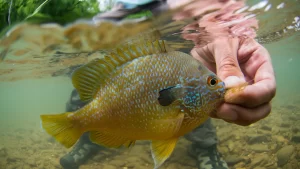
On bright days, especially after a cold front, panfish often slide shallow to warm up. In clear water, look for light-colored nesting beds or the fish themselves cruising near cover.
Approach quietly and cast beyond visible fish, retrieving the bait back into their strike zone. Watching a bluegill or crappie flare its gills and charge a lure adds an extra layer of excitement.
8. Pay Attention to Predators
Predators often reveal where panfish are hiding. Largemouth bass, northern pike, and even pickerel patrol the same spring areas, feeding on smaller fish. Birds such as herons, gulls, and ospreys are also strong indicators.
If bass are biting consistently, chances are panfish are nearby. A small adjustment in depth or presentation can quickly turn incidental catches into steady panfish action.
9. Jig Tight to Cover
Cover is always a magnet. In spring, bluegills tuck into reeds, cattails, docks, and lily pads for protection. Crappies often relate to submerged wood, tree roots, and deeper vegetation.
A 1/32- to 1/16-ounce jig tipped with a worm or minnow can be dropped directly into heavy cover. Subtle rod-tip twitches often trigger reaction strikes. Fish will dart out, grab the bait, and retreat just as quickly.
10. Keep It Fun and Simple
Spring panfishing does not require complicated gear or advanced tactics. With fish shallow and feeding, success often comes down to light tackle, smart location choices, and patience.
There is a timeless pleasure in catching panfish on a mild spring day. Buckets may fill quickly, but even when they do not, the steady action and shallow-water excitement make it one of the most rewarding seasons on the water.
Image/Source: MeatEater