Chasing false albacore from the beach is one of the most exciting challenges in saltwater fly fishing. These fast moving fish test every part of an angler’s skill, from casting distance to quick reactions. With the right approach, patterns, and understanding of conditions, landing an albie from shore becomes far more achievable.
Timing the Bite
False albacore are unpredictable, but certain patterns repeat themselves throughout the season. These fish typically show up as early as late August and can stick around into early November, depending on conditions.
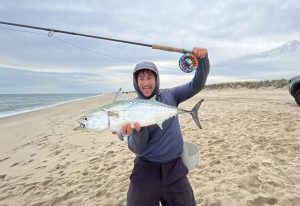
One of the most reliable triggers is the tide change. The best action often happens during the first hour after slack tide, whether it is high or low. When the water starts moving, bait gets pushed and concentrated, and albies quickly follow.
Arriving early is key. Being in position before the tide turns allows anglers to intercept fish as they move through feeding zones.
Bigger Bait Means Bigger Opportunity
Albies are known for their sharp eyesight, which makes matching small bait difficult. When they are feeding on tiny sand eels or spearing, fooling them can be frustrating.
However, when larger bait like squid, butterfish, or bigger sand eels are present, the game changes. Albies become far more aggressive and are more willing to chase larger flies. This is when anglers should switch to fuller, more visible patterns that stand out in the water.
Weather Can Work in Your Favor
Calm, sunny days can produce fish, but rough weather often creates better feeding conditions. Wind and waves push bait toward the shoreline, concentrating it in tight areas. Albies take advantage of this by trapping bait against the beach.
Instead of blind casting in tough conditions, focus on locating active fish. Look for surface feeds or fast moving schools. When albies are feeding hard, they become less cautious and more likely to strike.
Early Morning Advantage
First light is one of the most productive times to target albies from shore. As the sun begins to rise, schools often push close to the beach in search of bait.
These early feeds can be short lived, so being ready at dawn is critical. Sometimes the fish pass through once and disappear, while other mornings provide steady action.
Retrieve Matters
A consistent retrieve is essential. Albies are drawn to movement, so keeping the fly in motion is key. A steady two handed strip works well, maintaining a natural but active presentation.
Always fish the fly all the way to the rod tip. Many strikes happen at the last second, right at your feet, and stopping early can cost you fish.
Finding the Right Structure
Unlike freshwater fishing, where structure often means rocks or logs, beach fishing relies on subtle changes in the bottom and current.
Fast moving water is one of the most important factors. Current edges create natural feeding lanes where bait gathers. Albies often sit just outside the main flow, darting in to feed before slipping back into position.
Sandbars are another prime location. As waves break over them, turbulence disorients baitfish. Albies patrol these edges, especially on higher tides when there is enough depth for them to move freely.
Troughs between sandbars are also highly productive. During higher tides, fish move through these deeper channels and often feed along the backside of breaking waves. A well placed cast into these zones can quickly lead to action.
Gear That Gets It Done
Having the right gear makes a major difference when targeting albies from shore. Fast action fly rods are preferred because they generate distance with fewer false casts, which is critical when fish appear suddenly.
Reels should have a smooth drag system and enough backing to handle long runs. Albies are known for blistering speed, and a strong reel helps maintain control during those runs.
Floating lines with aggressive tapers are a popular choice because they load quickly and allow for long casts with minimal effort.
Backing is just as important. A strong, thin backing gives both capacity and durability. Leaders are typically built in sections, tapering down to lighter line when fish are hesitant to commit.
Choosing the Right Flies
Effective albie flies share a few common traits. Large eyes help imitate baitfish, while contrasting colors make the fly easier to see. A slim profile allows the fly to move naturally through the water.
Natural materials like bucktail combined with synthetic fibers create lifelike movement. Popular patterns often include bright color combinations that mimic local bait species.
Handle with Care
False albacore are powerful fish, but they require careful handling. Minimize time out of the water and be prepared before lifting the fish for a quick photo.
When releasing, guide the fish forward in the water so it can swim off strongly. Proper handling ensures these fish remain healthy for future encounters.
Mastering these fundamentals can turn chaotic albie fishing into a more consistent and rewarding experience. With the right timing, structure, and presentation, anglers can greatly improve their chances of connecting with one of the fastest fish found along the shoreline.
Image/Source: OTW