Brook trout occupy a rare and cherished space in the world of freshwater fishing, and for one seasoned Maine angler, that reverence is exactly why they are left alone once the lakes freeze. When asked about early-season ice fishing for brook trout, the answer is simple: it has been done before, but it is no longer a preferred pursuit.
Few fish inspire the same admiration as a brook trout. Celebrated for their striking colors and elegant form, they are often considered the most visually stunning freshwater species. From small backcountry ponds in Maine to distant waters in Labrador, Quebec, and even Patagonia, brook trout have long been a symbol of everything that feels right about fly fishing. Size has never mattered—what matters is the setting, the simplicity, and the connection to wild water.
Because of that deep appreciation, ice fishing for brook trout feels wrong to this angler. While winter harvest of brook trout is popular and heavily supported by stocking programs—often including large brood fish specifically intended for ice anglers—there remains a sense that brook trout are simply too special to be pulled through a hole in the ice. This view is offered without judgment. Ice fishing for brook trout has its place, and many anglers enjoy it responsibly. It just is not a practice embraced here.
That does not mean ice fishing itself is avoided. Far from it. Ice fishing remains an enjoyable winter pastime, including occasional trips for trout. The difference lies in species selection. Brown trout and rainbow trout, neither native to Maine, are considered fair game through the ice. When winter trout fishing does happen, deeper water is targeted, and shallow shoreline areas favored by brook trout are intentionally avoided. At times, waters known for strong brook trout populations are bypassed altogether.
Even so, trout are not the primary winter focus. Ice fishing for trout often feels slow and methodical, and while solitude is one of its greatest rewards, action is preferred. As noted outdoor writer V. Paul Reynolds once described, time on the ice represents “the essence of solitude,” a sentiment that rings true. But when temperatures are low and the wind bites, standing still loses its appeal. Without a permanent shack or portable shelter, staying active becomes the key to comfort.
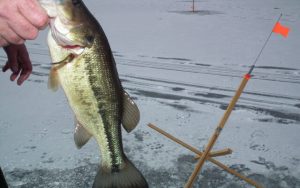
That activity usually comes in the form of early-season ice fishing for warmwater species. Before winter fully settles in and fish become sluggish, black bass, yellow perch, and panfish provide consistent action. Black bass are particularly appealing due to their size and strength. While they can be slow at times, a bass tripping a tip-up or striking while jigging delivers a memorable fight, even in midwinter.
Yellow perch, however, are the clear favorite. Many local ponds hold abundant populations, and with no length or possession limits, they are both accessible and plentiful. Perch school tightly, bite aggressively, and can be caught using nearly any method. Once located, steady action usually follows. They also happen to be among the best-tasting freshwater fish available, with mild, flaky meat well-suited for frying.
Other warmwater species, such as pickerel and assorted panfish, make occasional appearances as well. While pickerel offer little appeal beyond a willingness to bite and a brief fight, they are part of the winter mix.
As the ice fishing season gets underway across Maine, anglers will head out in pursuit of many different species, each for their own reasons. Whether chasing trout, bass, perch, or panfish, the draw remains the same: fresh air, quiet moments, and time outdoors during the long winter months.
Winter fishing offers countless ways to stay connected to the outdoors, no matter the target species. Anglers are encouraged to reflect on their own traditions, values, and favorite winter pursuits. Respect local regulations, fish responsibly, and choose species that align with personal ethics and enjoyment. Most importantly, get outside, stay safe on the ice, and make the most of the season while it lasts.
Image/Source: observer-me